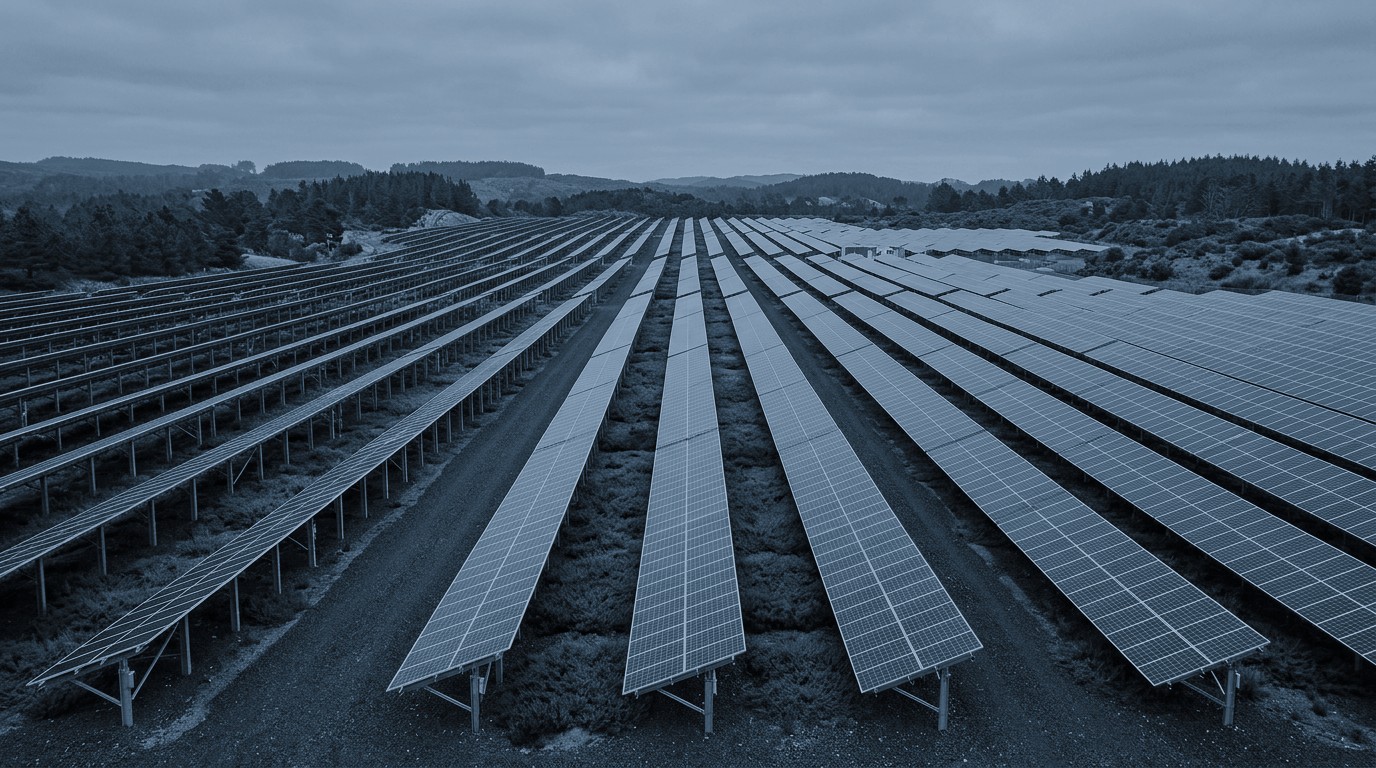
“A solar asset is not an equipment purchase; it is a twenty-five-year power plant whose financial performance is locked in before the first rail is bolted.”
Beyond Hardware Procurement
Across Southeast Asia and wider Asia-Pacific markets, corporate decarbonization goals have shifted rapidly from exploratory pledges to concrete capital-allocation decisions. Yet many commercial and industrial deployments still evaluate solar photovoltaic infrastructure as a short-term procurement exercise rather than a multi-decade energy asset.
When projects compress feasibility studies, financial modeling, and structural suitability audits in order to accelerate installation timelines, the hidden costs emerge years later through underperforming yields, premature inverter degradation, and unplanned downtime.
The Integrated Three-Phase EPC Discipline
Bankable renewable deployment requires unbroken accountability across pre-construction, construction, and post-construction operations. In the pre-construction phase, rigorous solar resource assessment, financial payback modeling, permitting compliance, and engineering design align physical constraints with commercial ESG objectives.
During construction, pairing disciplined project management with direct Tier-1 OEM procurement — across proven international manufacturers including REC, Trina Solar, Canadian Solar, Tata Power, Vikram Solar, and Adani Solar — ensures module performance, thermal resilience, and warranty enforceability under demanding climatic conditions.
Sustaining Yield Over Quarter-Century Horizons
Commissioning marks the beginning, not the end, of long-term asset performance. Continuous real-time data monitoring, scheduled preventive maintenance, technology upgrade pathways, and rapid emergency response protocols convert rooftop, carpark, and utility ground-mount installations into predictable balance-sheet assets.
For enterprises balancing operational cost reduction with verifiable sustainability commitments, integrated EPC governance anchored in strict Health, Safety, Security, and Environment (HSSE) standards remains the decisive differentiator.